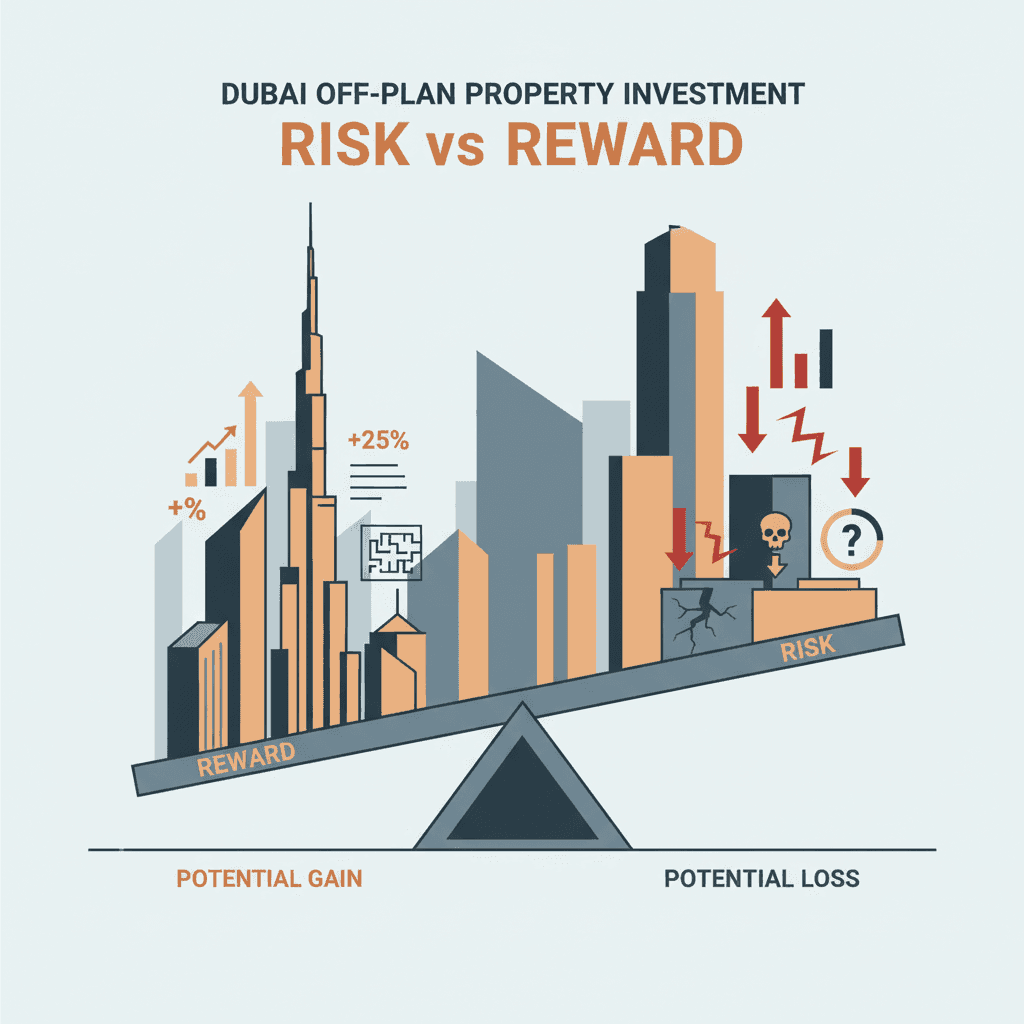
UAE vs USA Real Estate: Net Yields, Taxes, and Visa Benefits Compared
Compare Dubai vs USA property investment: net yields, taxes, costs, financing, and UAE Golden Visa.

Choosing between the UAE and the USA for your next property investment comes down to what you value most: higher advertised yields and tax-light ownership in Dubai, or mature, rule-dense markets and deep financing in the United States. This guide gives you a clear, data-backed comparison—returns, costs, taxes, financing, ownership rights, and residency—so you can align the market with your goals and risk tolerance.
UAE vs USA at a glance
| Factor | UAE (Dubai) | USA |
|---|---|---|
| Market profile | Young, fast-evolving, policy-driven growth | Mature, highly regulated, deep liquidity |
| Typical gross rental yields | ~6–8% (5–10% by district; e.g., JVC, Business Bay often higher) | ~3–5% in prime coasts; ~6–10% in many Midwest/Sun Belt metros |
| Recent price growth (YoY) | ~11.6% (2023–2024 average; higher in prime) | ~3.3% nationwide (varies widely by metro) |
| Local taxes on rent and gains | No personal income or capital gains tax on property | Income tax on net rent; capital gains tax on sale; state taxes may apply |
| Recurring property tax | None (service charges/HOA apply) | Yes (often ~0.6–2.0% of assessed value annually) |
| Entry/closing costs (buyer) | Resale ~6–7% all-in (incl. 4% DLD transfer + fees) | Mid-single digits vary by state/financing; seller typically pays agent commissions |
| Financing | Mortgages for residents/non-residents; strong off‑plan payment plans | Deep, standardized mortgage market (e.g., 30‑year fixed) |
| Residency benefit | Golden Visa via property from ~AED 2M+ | Property ownership does not grant residency |
| Currency | AED pegged to USD (reduces FX risk for dollar investors) | USD base |
Rental yields and cash flow: what you can realistically net
You’ll often see Dubai marketed at 6–9% gross yields in mainstream districts and 5–7% in central, premium locations (Palm Jumeirah, Downtown, Dubai Marina). In practice, net yields usually settle closer to ~3–6% once you include service charges, management, maintenance, licensing, and vacancy. In the U.S., prime coasts may show 3–5% gross with stronger long-run appreciation; secondary/tertiary metros can reach 6–10% gross, with net returns shaped heavily by property taxes, insurance, HOA, capex, and management.
- Dubai drivers: expat demand, strong STR potential in tourism corridors, no property tax, fast transactions.
- USA drivers: data abundance, financing depth, tax optimization (depreciation, 1031 exchanges for U.S. assets), and local regulation.
Capital appreciation and cycle behavior
Dubai has outpaced many mature markets recently (~11.6% YoY), especially in prime districts. It’s also more cyclical and sensitive to global capital flows and delivery waves—watch potential oversupply in luxury/branded segments late this decade. U.S. appreciation is typically steadier at the national level (~3.3% YoY recently) but hyper-local by metro and submarket. Supply constraints in key U.S. cities support long-run values but can compress yields.
Taxes: what you keep after tax
- Dubai (UAE assets): no personal income tax on rent, no local capital gains tax, and no recurring property tax. You still pay one-off registration/transfer fees and ongoing community/service charges.
- USA (U.S. assets): federal and state income tax on net rental income, annual property tax, and capital gains tax at exit. However, depreciation can significantly shelter taxable income, and 1031 exchanges can defer gains when reinvesting in U.S. “like-kind” property.
- U.S. taxpayers investing in Dubai: you must report worldwide income to the IRS; UAE rental income and gains can be taxable in the U.S. Depreciation generally applies to foreign property. There is no comprehensive U.S.–UAE income tax treaty; consult a cross-border tax advisor.
- Non-U.S. owners selling U.S. property: FIRPTA withholding may apply at exit; plan ahead with specialized counsel.
None of the above is tax or legal advice; always consult qualified professionals for your situation.
Entry, closing, and ongoing costs
| Cost line | Dubai (UAE) | USA |
|---|---|---|
| Transfer/registration | 4% DLD transfer (resale and Oqood off‑plan) | City/state transfer taxes vary |
| Agency/commission | ~2% on resales (customs vary) | Seller typically pays ~5–6% in many states; evolving |
| Trustee/escrow, admin, title | Trustee and admin fees apply; mortgage registration ~0.25% of loan | Title insurance, escrow, appraisal, lender fees if financing |
| All‑in buyer entry (resale) | ~6–7% of price | Often mid‑single digits for buyers; varies by state/loan |
| Recurring taxes | None (no annual property tax) | Annual property tax ~0.6–2.0% of assessed value |
| Service charges / HOA | Per sq ft, varies by community/amenities | HOA varies; not all assets have HOA |
| Insurance | Typically modest for apartments; landlord contents optional | Material in many markets; rising in some coastal states |
| Property management | Long‑term ~5–8% of rent; STR can be ~15–20% | Long‑term ~8–10% of rent; STR varies widely |
Financing and leverage: mortgages vs payment plans
- Dubai: mortgages available to residents and non-residents with different LTVs and rates; mortgage registration applies. A distinctive feature is off‑plan payment plans (construction-linked and post‑handover schedules), reducing upfront cash and magnifying cash-on-cash returns—alongside build/delivery and market timing risk.
- USA: deep, standardized financing (e.g., 30‑year fixed). Abundant products for both primary residential and investment purchases, plus refinancing tools as rates change.
Ownership rights and legal framework
- Dubai: freehold ownership for foreigners in designated zones (e.g., Downtown Dubai, Dubai Marina, Palm Jumeirah); escrow protections for off‑plan; Oqood registration before handover; digitized, fast processes via the Dubai Land Department.
- USA: fee simple ownership widely available to foreign buyers; robust property rights and landlord-tenant frameworks that vary by state and city.
Residency and the UAE Golden Visa
Property investors meeting the threshold (commonly AED 2 million+) can apply for the UAE’s Golden Visa, a multi-year residency that allows family sponsorship. For many global investors, this residency utility sits alongside yield and tax advantages when evaluating Dubai vs the USA.
Short‑term rentals and operational rules
- Dubai: STR allowed with licensing; rules vary by building/community. Tourism hubs (Downtown, Marina, Palm) can deliver strong occupancy, but confirm building policies, furnishing standards, and management fees upfront.
- USA: city-by-city. Some metros encourage STR in vacation corridors; many prime cities restrict or ban it. Your pro‑forma must reflect local ordinances, seasonality, and hotel competition.
5‑year, after‑cost snapshots (illustrative)
The table below simplifies two common strategies on a USD 500,000 ticket. Assumptions are indicative only—always underwrite a specific asset and location.
| Item | Dubai example (1BR, Business Bay) | USA example (SFR, Sun Belt) |
|---|---|---|
| Purchase price | $500,000 | $500,000 |
| Buyer entry costs | ~6.5% ≈ $32,500 | ~2.5% ≈ $12,500 (varies by state/loan) |
| Gross yield (year 1) | ~7% ≈ $35,000 | ~6% ≈ $30,000 |
| Annual operating costs (typical) | Service charges ~1.5% of price ($7,500); mgmt ~8% of rent ($2,800); maintenance reserve ~0.5% ($2,500); vacancy ~5% of rent ($1,750) → ≈ $14,550–$15,050 | Property tax ~1.2% ($6,000); insurance ~0.4% ($2,000); HOA ~0.3% ($1,500); mgmt ~8% ($2,400); maintenance reserve ~0.8% ($4,000); vacancy ~5% ($1,500) → ≈ $17,400 |
| Indicative net yield (unlevered) | ~3.8–4.2% | ~2.3–2.7% |
| Appreciation assumption (5‑yr CAGR) | ~5% → exit price ≈ $638,000 | ~3% → exit price ≈ $579,000 |
| Exit friction (illustrative) | Agency ~2% of sale (~$12,760); no local CGT | Seller commissions often ~5–6% of sale (~$29k–$35k); CGT applies unless deferred via 1031 on U.S. assets |
| Tax notes | No local tax; U.S. taxpayers must report worldwide income; depreciation on foreign property may apply | Depreciation can shelter rental income; state taxes vary |
These are not guarantees. Sensitize for rents, vacancies, interest rates, service charges/taxes, and exit prices. For U.S. taxpayers, model after‑tax cash flows with a cross‑border CPA.
Who should favor which market?
- Choose Dubai (UAE) if you prioritize: higher gross yields, no local tax on rent/gains, fast/streamlined transactions, off‑plan payment plans, and the Golden Visa residency option.
- Choose the USA if you prioritize: long‑run stability, deep financing options, robust legal protections, tax optimization tools (depreciation, 1031 on U.S. property), and abundant underwriting data.
Your step‑by‑step next steps
- Define your objective: income, appreciation, diversification, or residency.
- Pick strategy: off‑plan vs ready (Dubai); long‑term rental vs STR; value‑add vs turnkey (USA).
- Model all‑in economics: entry costs (Dubai ~6–7% resale; U.S. varies), operating line items (service charges/HOA, taxes, insurance, management, maintenance, vacancy), and exit frictions.
- Confirm rules: STR licensing (Dubai building-by-building; U.S. city-by-city), landlord‑tenant laws, non‑resident financing criteria.
- Plan taxes and compliance: U.S. persons must report global income; clarify depreciation, withholding, and potential treaty limitations.
- Work with regulated, experienced brokers and property managers in your target submarket; prioritize developer and community quality in Dubai.
FAQs: US vs UAE Property Investment
Are Dubai rental yields really higher than in the USA?
Often, yes at the gross level. Many Dubai districts show ~6–8% gross (sometimes 5–10%). Net yields typically compress to ~3–6% after service charges, management, maintenance, and vacancy. In the U.S., gross yields range from ~3–5% in prime coasts to ~6–10% in many Midwest/Sun Belt markets, with net outcomes shaped by property taxes, insurance, HOA, and capex.
What are the real closing costs in Dubai compared to the U.S.?
In Dubai resales, budget roughly ~6–7% all‑in (including the 4% Dubai Land Department transfer fee, agency, and trustee/admin). In the U.S., buyer closing costs vary by state and loan but are often in the mid‑single digits; sellers commonly pay most agent commissions.
Can Americans get a mortgage in Dubai?
Yes. U.S. citizens can access mortgages in Dubai, though LTVs, rates, and underwriting differ vs U.S. loans. Many investors also use off‑plan developer payment plans to stage capital.
Does the UAE have a property tax?
No recurring property tax in Dubai. Expect community/service charges, insurance, and management fees; for U.S. taxpayers, UAE rental income is still reportable to the IRS.
What is the UAE Golden Visa threshold through property?
Commonly AED 2 million+ in qualifying property value. It offers multi‑year residency and family sponsorship. Always confirm current rules and documentation requirements.
Is the AED really pegged to the USD?
Yes. The AED is pegged to the USD, which reduces FX volatility for dollar‑based investors.
Can I use a 1031 exchange with Dubai property?
1031 exchanges apply to U.S. real property. Foreign property generally does not qualify for 1031; speak with a U.S. tax advisor about your options.
How fast can I close?
Dubai cash deals can close very quickly once documentation is ready. U.S. closings typically take 30–60 days with financing due to inspections, appraisals, and underwriting.
Bottom line
If you’re yield‑focused, tax‑sensitive, and value speed plus a residency pathway, Dubai stands out. If you want multi‑cycle stability, abundant financing, and the ability to engineer returns through operations and tax optimization, the U.S. remains hard to beat. Align your market with your objectives, underwrite conservatively, and pressure‑test both cash flow and exit assumptions before you buy.